Home EV charging vs public EV charging

Last updated: Apr 7, 2026
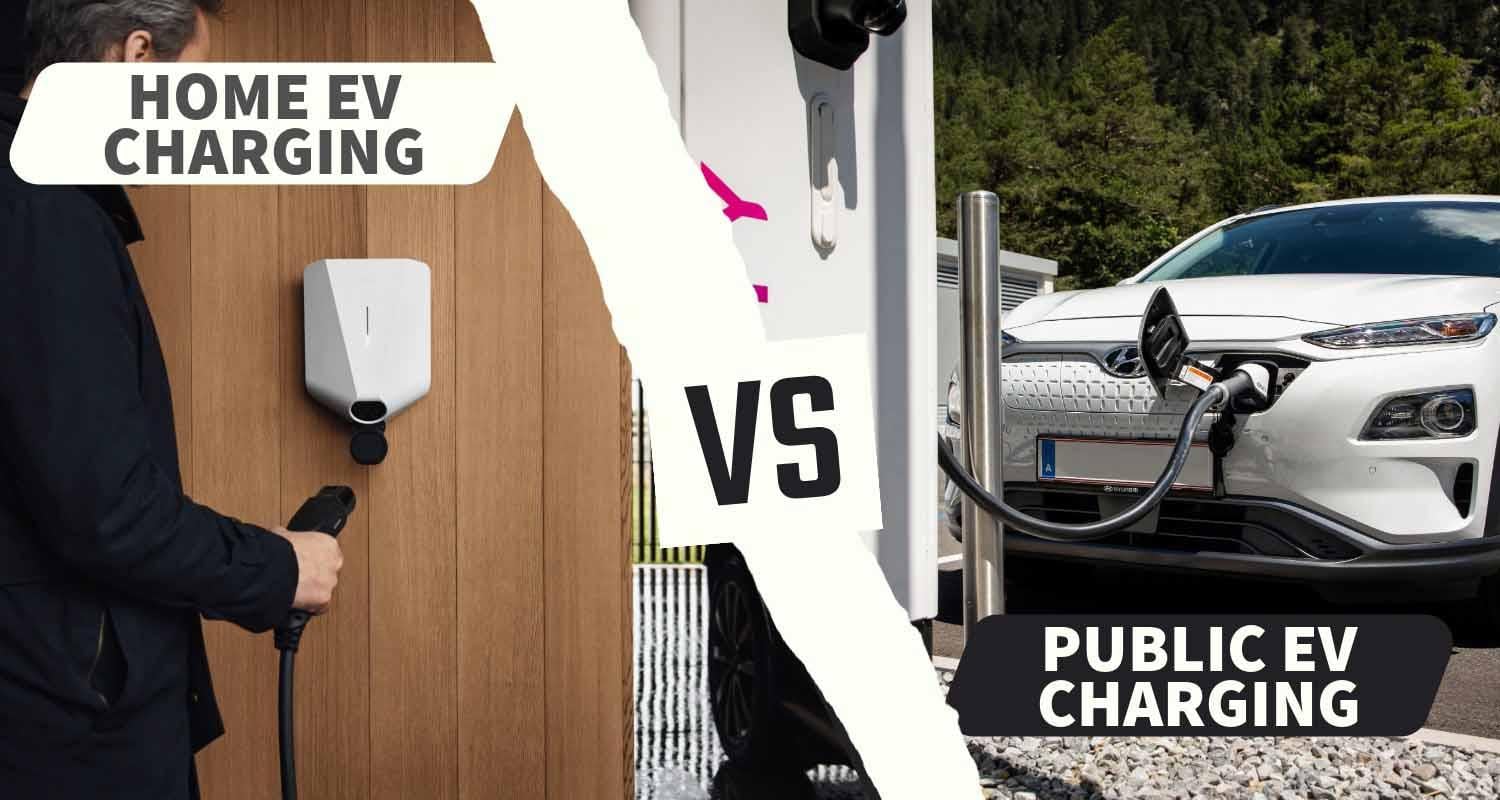
This guide explains the key differences between charging electric vehicles at home or out on the road using the public network.
No matter your set up, it's likely you'll experience both at some point with EV ownership, so here's all you need to know.
Cost comparison: Home EV charging cost vs public charging
|
Scenario |
Home (off-peak) |
Home (standard tariff) |
Public (Tesla Supercharger) |
Public (rapid network avg) |
|
Typical price per kWh |
7-8p |
27-28p |
40p |
56-76p |
|
Cost per full charge (75kWh) |
£5-£6 |
£20-£21 |
£30 |
£42-£57 |
|
Cost per 100 miles |
£2.60 |
£7-£8 |
£10-£11 |
£13-20 |
|
Annual cost (10k miles) |
£180-£300 |
£700-£760 |
£1,050 |
£1,300+ |
In the example below we have used a Tesla Model Y (Long Range) to show a break down on the price difference you can expect when comparing between charging at home or on the road.
The costs for charging start to increase with each step away from a home charger, with the most expensive option being the public rapid charger network.
Annual costs can be as dramatic as 622% higher if you're comparing to just charging at home off-peak, with charging 100% of the time on public network rapid chargers.
There are also going to be some different variables that change the costs involved, so we would urge you to check out the cost to charge tool to put in the details that are relevant to your EV and mileage.
Home EV charging explained
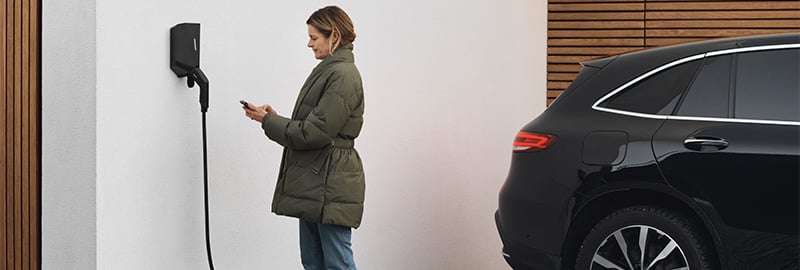
This section guides you through some of the biggest bonuses EV owners can access by being able to charge your electric vehicle at home. How much does it cost to get a charger installed and how much money will I end up saving?
Advantages of home charging
Lower running costs
This is one of the big ones. Charging at home is the most cost effective way to run your electric vehicle. You can access the lowest rates with dedicated EV tariffs from providers like Octopus and OVO.
Intelligent Octopus Go means you can charge from a rate as low as 8p/kWh from April 1.
Have a look at Smart Home Charge's Cost to Charge tool to get some examples of how much it might cost you to charge up your specific EV.
For example, electric vehicle owners with an MG4 Urban Comfort Long Range that charge during off-peak hours on Intelligent Octopus Go, should expect a charge of approximately £4.31 for six hours of charging.
Off-peak charging at a rapid charger on the public network would be approximately £36, while the cost to charge at a destination charger would be around £21 for a single charge.
It's convenient
This is another big one. If you have off-street parking, or if you're able to use a cross pavement solution, your "fuel station" is always right outside your door. No more trips to the petrol station. Once you're all set up with your smart charger, just plug-in your EV and you're sorted.
You can view your charging session from your smartphone through your charger's app (or your EV's app in some cases).
It's predictable
Once you're all set-up at home, you don't have to take into consideration whether a charger might be available, how busy it is at the charging station or what charging speed is available at a particular location. You know that you're going to get access to a 7kw home charger and provided you have some experience with your charging sessions and what you need, you know that your EV will be ready with the right level of charge before your next journey.
If you do ever need any extra support with your home set-up though, Smart Home Charge is here to help.
Protecting your EV battery
It's possible to lengthen the life of your EV battery by making sure you're not rapid charging too frequently and you're avoiding extreme states of charge.
If you're not doing big mileages and you're charging at home, you can keep the state of charge between that 10%-80% sweet spot. The level of charge running through the battery is going to be much lower than if you're ultra-rapid charging your EV multiple times a week too.
Disadvantages of home charging
It's not suitable for everyone
If you don't have off-street parking or have access to a home charger through a cross pavement solution, it's not always straightforward to access topping up at home.
There are still some options available for those renting or even community charging options to still open up home charging for all EV drivers, but it's not always possible for everyone.
An install is required
In order to access the convenience of home charging you will need to get a charger installed.
The upfront cost is another consideration, although Smart Home Charge can help facilitate finance options to help spread the cost for EV owners, with monthly payments from £9 per month.
There are a variety of highly-rated home chargers to choose from for under £1,000, which includes the charger and installation.
Public charging explained

This part of the guide lists out some of the public charging costs and the ups and downs of using public charging infrastructure, whether that's fast charging, rapid charging or topping up at a destination charger at shopping centres or gym.
Advantages of public charging
Essential for long journeys
The useable range of most modern EVs mean you still won't likely need to use the public charging network for the majority of your journeys (the average UK car trip is just 8.2 miles).
For example, in a long range EV like a Volvo EX60, you could do up to 503 miles WLTP on a single charge. That's almost on par with how many miles on average that you would get out of the tank a petrol XC60.
But if you're going to be doing longer trips you'll likely need to visit public EV chargers or park up at a destination charger location to add some more range to your EV.
Lots of chargers dotted around the country
Charging anxiety might still be a problem for some, but at this point it's likely that wherever you end up on your journey, you're not going to be too far away from a rapid or destination charger.
According to the latest figures from ZapMap, there are now over 118,300 public EV charge points in the UK, located across approximately 45,561 charging stations.
The infrastructure is growing rapidly, with thousands of new devices added monthly, covering on-street, destination and rapid charging needs
Some have really cheap rates (or are even free in rare cases)
Destination chargers will typically be priced between 40-55p/kWh. Using Smart Home Charge's Cost to Charge tool shows that Char.gy's network offers pricing at 39p/kWh.
For an Audi Q4 e-tron charging at a destination charger off-peak, that would work out at about £24. It's no way near as cost effective as charging at home, but it's still a lot cheaper than filling up with petrol or diesel for the equivalent range.
The number of free chargers are disappearing each year as the electric car market becomes bigger. Many networks and businesses had been offering free charging as an incentive to early adopters.
According to ZapMap's latest figures, around 2,042 chargers are free-to-use.
Zap-Map has a filter that can help you find free charging points.
Users of the site can use the filter functionality to search by payment and "free to use" to provide a map of all the free charge points currently across the UK.
There are still quite a few charge points available that are free to use, but there is a slight caveat in that some of them has a status that is "unknown".
Disadvantages of public EV charging
Higher costs
There are a few things going against charge point operators (CPOs) when it comes to offering competitive pricing on the public network.
Putting the infrastructure in place is costly and that is going to make its way onto the price of what EV owners paying to charge. The Government also charges a higher rate of VAT for charging publicly.
At home you pay 5% VAT, whereas on the public network you have to pay 20%. The EV and charging industry has been lobbying the Government to reduce the rate of VAT but it hasn't happened yet.
A recent March 2026 tribunal ruling suggested a reduction to 5% for public charging to improve fairness, though this is subject to a potential appeal by HMRC.
Availability issues
Queues can occasionally build up at public charging points, particularly at rapid chargers on the motorway. That's not to say it's a problem you're always going to run into, but it's still something to consider.
Data commissioned by Direct Line Motor Insurance in August 2025 found that 66% of EV drivers had faced 'significant waits' to plug in to a public charger, highlighting ‘significant challenges’ with the network.
The study, which canvassed the views of 1,000 motorists, found that of the drivers who have had to wait at public EV charging stations, the average delay was 22 minutes.
Some EV drivers complained of waiting times of up to two hours and 74% said charging spots were also blocked by cars that weren't even plugged in. This is called "iceing" where an internal combustion engined (ICE) vehicle takes up a EV charging bay.
Not always reliable
ZapMap's latest annual satisfaction ratings from November 2025 show that the public charging stations have improved their overall ratings from 64% to 69%.
That still means there are still under two-thirds of EV drivers that are not satisfied with what is available on the public network.
There's now a 99% uptime mandate in place for rapid chargers in the UK.
That means the main networks and those that you will find on the motorway have to legally make sure chargers are available when you need to top up. CPOs can be fined up to £10,000 per rapid network if they fall foul of the rules.
However, according to Zest's 2026 EV Charging Reliability data, only 3.9% of operators meet or exceed 99% uptime.
Three-quarters of rapid charger providers report uptime above 95%.
Venturing outside of the rapid charger network is more of a gamble as to whether chargers will be operating or broken. There are further rules in place to guarentee uptime for other types of chargers too, but it's not quite as stringent compared with the rules for rapid chargers.
There's also less consolidated data overall about the reliability of destination chargers across the UK, so it's more of a case of scoping out the chargers in your local area to understand the level of reliability, or doing some research on sites like ZapMap before a big journey.
In conclusion
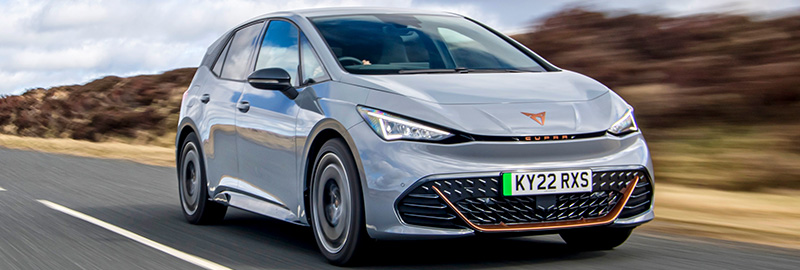
For most EV drivers, the long term balance is likely to tilt firmly towards home charging as the default, with public infrastructure playing a supporting role rather than a primary one.
As EV technology matures towards 2030, the question is less about whether drivers can charge, and more about how easily and cheaply they can do so. On both counts, home charging is set to remain the best option for running an EV as efficiently as possible.