
BMW 330e Charging Guide

Last updated: Feb 19, 2026
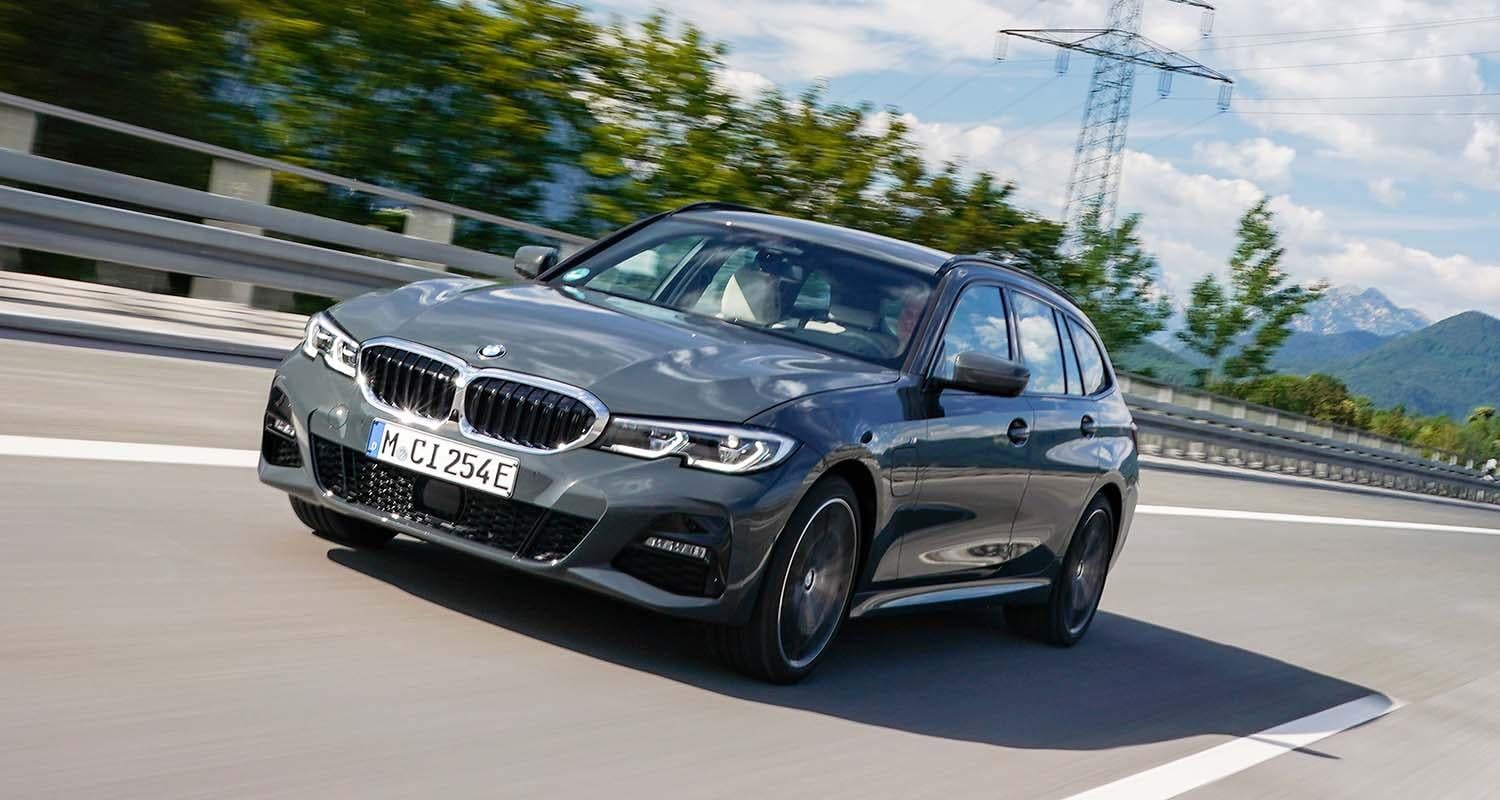
The BMW 330e combines petrol power with electric driving capability in one refined package. As a plug-in hybrid electric vehicle (PHEV), it offers the flexibility of a conventional engine alongside the ability to drive short distances on electric power alone.
Unlike a fully electric car, the BMW 330e features a smaller battery and shorter electric range. However, with regular home charging, drivers can significantly reduce fuel cost and maximise electric-only driving.
Here’s everything you need to know about charging the BMW 330e.
Not your vehicle? Find the specs for your specific BMW on our BMW database
BMW 330e charging at a glance
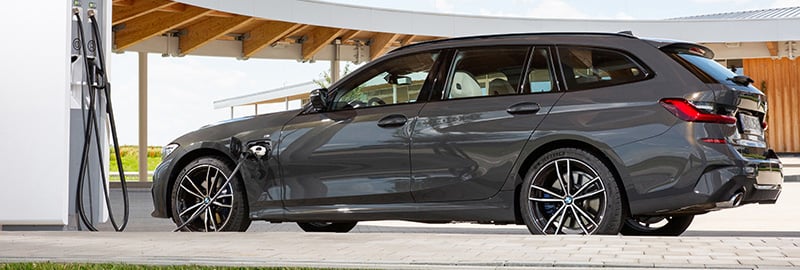
The BMW 330e supports AC charging via a Type 2 connector type. It does not support DC fast charger access, as the battery is relatively small compared to a full electric car.
Key charging details include:
- Battery size: Around 12 kWh (earlier models) or 19.5 kWh gross (newer models)
- Maximum charging power: 3.7 kW AC
- Typical charge time: Around 3–5 hours
- Charging port location: Front wing (varies slightly by model year)
Because of its smaller battery, a wall charger at home is more than sufficient to fully charge the vehicle in just a few hours. High power public charging networks designed for DC fast charging are not necessary for this plug in hybrid system.
What is the electric range of the BMW 330e?
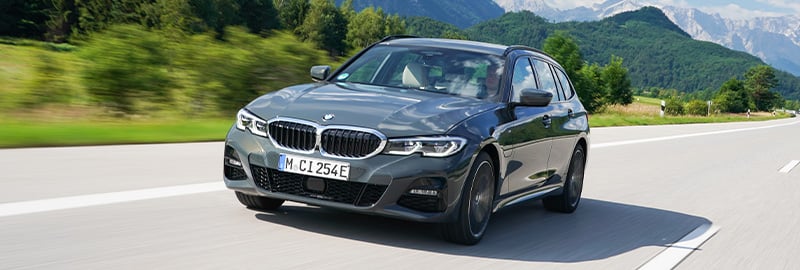
The BMW 330e delivers a modest but useful electric range.
-
Earlier versions offer around 37 miles (WLTP)
-
Newer models with the larger battery offer up to 62 miles (WLTP)
Real-world range will vary depending on driving style, temperature and how drivers manage energy use. In practice, many daily commutes can be completed using electricity alone, reducing fuel use and lowering emissions.
For customers who charge regularly at home, the electric range can significantly reduce overall fuel consumption and running cost.
Charging the BMW 330e
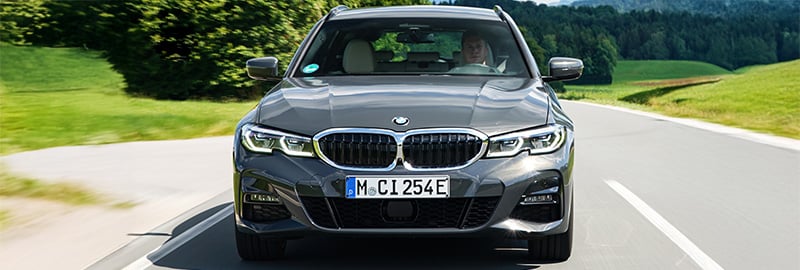
All generations of the BMW 330e use a Type 2 connector meaning that it's compatible with all untethered home EV chargers and all Type 2 tethered EV chargers.
Since the BMW 330e does not have a CCS port, it cannot charge at a rapid or ultra-rapid charging station.
What home EV chargers work best with the BMW 330e?
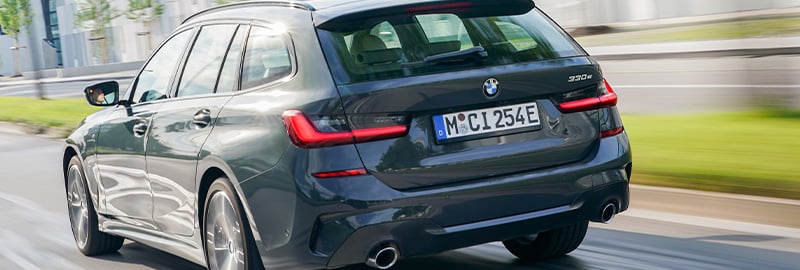
Since the vehicle’s maximum charging power is 3.7kW, any 7kW home charger will comfortably support it. Smart chargers with app control allow you to schedule charging, monitor energy use and optimise electricity cost.
Professional installation is recommended to ensure safe operation and compliance with UK regulations.
Because the battery is relatively small, even a slower charge speed is usually sufficient to deliver a full recharge in just a few hours.
The BMW 330e also supports smart energy tariffs like Intelligent Octopus Go natively, meaning that you will not need a compatible charger to use those tariffs.
How fast can the BMW 330e charge when using a home EV charger?
For most customers, a home charger is the most practical solution.
The BMW 330e supports a maximum charging speed of 3.7 kW AC. Even if connected to a higher-rated wall charger (such as 7kW), the vehicle will only draw 3.7 kW due to its onboard charging system.
Typical home charging times:
-
Earlier 12 kWh battery: around 3–4 hours to fully charge
-
Newer larger battery: around 4–5 hours
In everyday practice, drivers simply plug in every night.
Professional installation of a wall charger is recommended for safety and convenience.
How many versions of the BMW 330e are there?
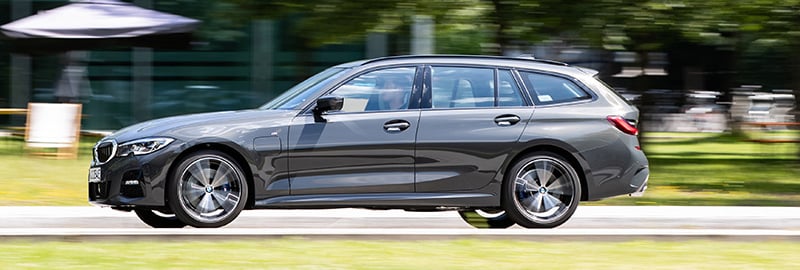
The BMW 330e is part of the 3 Series range and has been offered in several trims and body styles, including:
-
Saloon
-
Touring (estate)
Battery size and electric range vary depending on model year, with newer versions featuring a larger battery and improved electric-only capability.
All versions share the same core plug-in hybrid system, combining a petrol engine with an electric motor.
What are the specifications of the BMW 330e?
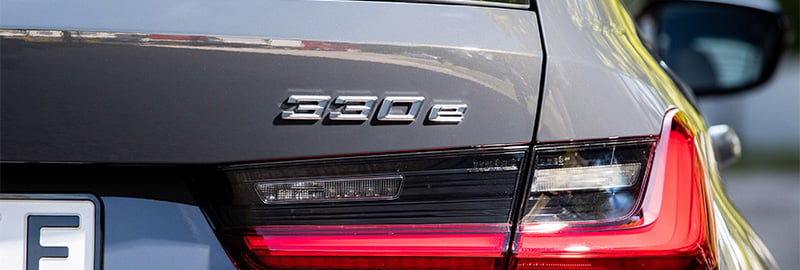
Key specifications vary slightly by generation but typically include:
-
Plug-in hybrid petrol-electric drivetrain
-
2.0-litre turbocharged petrol engine
-
Electric motor integrated into the gearbox
-
Battery capacity between 12 kWh and 19.5 kWh (gross)
-
Maximum AC charging speed of 3.7 kW
-
Rear-wheel drive (xDrive all-wheel drive available on some models)
The system allows drivers to switch between electric-only driving, hybrid mode or petrol power depending on conditions.
BMW 330e – Battery capacity
The BMW 330e features a compact lithium-ion battery designed for daily electric commuting rather than long-distance electric travel.
Earlier models use a battery of just over 12 kWh, while newer versions feature a significantly larger 19.5 kWh unit. The larger battery increases electric range and reduces reliance on petrol for short journeys.
The charging system carefully regulates energy flow to protect battery health and ensure long-term reliability.
BMW 330e – Performance
Performance is where the BMW 330e stands out among plug-in hybrid vehicles.
The combined output of the petrol engine and electric motor delivers strong acceleration, with 0–60 mph taking around six seconds depending on specification. Instant electric torque enhances responsiveness at low speeds, while the petrol engine provides sustained motorway performance.
Unlike a fully electric car, the 330e offers complete flexibility electric driving for shorter trips and conventional refuelling for longer journeys.
For drivers who want to reduce fuel cost and emissions without committing to a full electric vehicle, the BMW 330e offers a balanced and practical solution.