
Destination Charging Cost Comparison

Last updated: Aug 10th 2023
Destination charging is an excellent way to top up your electric car while you're out and about doing everyday stuff. We explain what destination charging is and break down the different providers to help reveal which EV chargers can save you the most money.
What is a destination charge point?
A destination charge point is an EV charger usually placed in a location where you do other everyday stuff, such as shopping, going to the gym or eating at a restaurant and so on. That means you can usually find EV chargers at supermarket car parks, shopping centres, council car parks, and even tourist attractions.
The idea is you can top up the charge in your electric car while you go about your day. They are handy even if you're able to charge at home (particularly because some are free!), but if you are unable to charge your EV at home then they are absolutely vital.
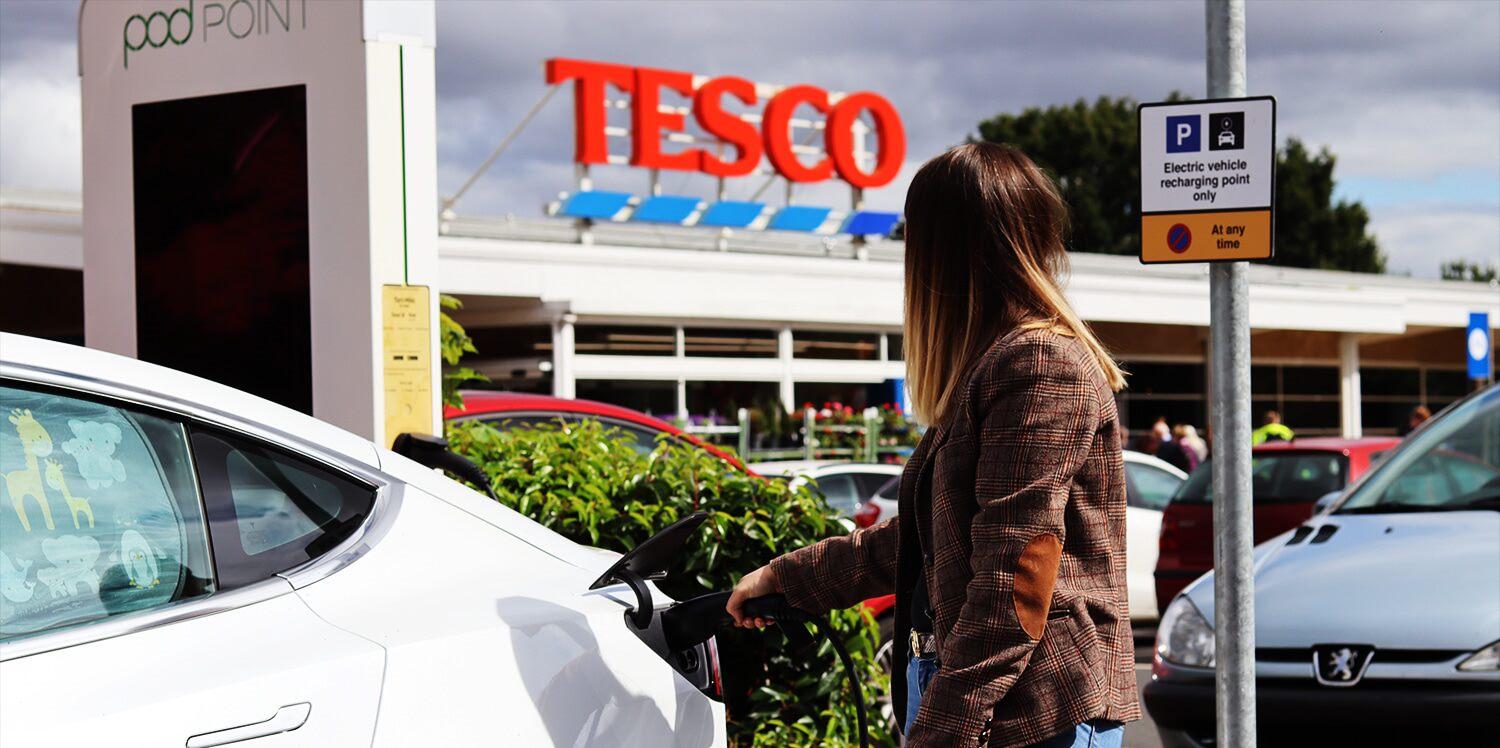
Many businesses use destination EV charging stations as a way to entice customers to their locations and will even offer complimentary free charging. Tesco, for example, had partnered with Pod point and offer free charging to customers while they do their food shop.
How fast are EV destination charge points?
Generally they are about as fast as the typical home, which is usually rates at between 3.6kW and 7.4kW. In normal speak, that means they will add around 6 to 30 miles of range per hour.
Some destination charge points offer faster charging than this if you can find a 22kW charger. These chargers can provide an even quicker top-up provided your vehicle can accept a 22kW AC charge - unfortunately, many EVs in the UK are limited to 7.4kW or less.
These are different to rapid charge points, which use DC (direct current), and can provide a much faster charge to your electric car using its CCS or CHAdeMO rapid charger connection. They are typically rated at 50kW and above and can even go as high as 350kW - they are designed to charge your EV battery in under an hour or much less.
Compare rapid charging costs
Compare the charging costs of the UK's most popular rapid charging networks using our rapid charging cost comparison tool,
Do I need my own cable to use a destination charger?
Yes, in most cases. That is because unlike rapid charge points, destination chargers are usually untethered which means they are just a socket. That also means you will need to provide your own cable, so it is well worth keeping one in your boot - you can purchase one via the Smart Home Charge store.
Want to know more about public charging?
Learn more about the different types of public charge points and how to use them in our guide to public charging
Types of destination charging stations
Destination chargers differ in charge speed and can be defined into two categories which we will explain in detail below:
Slow destination chargers
Slow destination chargers are AC charge points typically placed in locations where drivers tend to park their vehicles for extended periods of time such as long stay car parks, outside hotels and holiday resorts. Slow destination chargers typically charge vehicles using a single-phase current ranging from 3.6kW to 7kW (adding around 6 to 30 miles per hour of charge depending on your vehicle).
If cheap charging is what you're after and you know that your electric vehicle is going to be parked for a long while, using a slow destination charger is a great choice as they often offer low cost or even free charging.
Fast destination Chargers
Fast destination chargers, like the name suggests, charge EVs at a faster rate than slow destination chargers, usually ranging from 7-22kW (Adding around 30 to 60 miles per hour of charge depending on your vehicle). These types of chargers are typically seen in places where users tend to leave their car at for an hour or more such as at supermarket car parks, theme parks, shopping outlets and cinemas.
The price of using a fast destination charger is sometimes included in the cost to stay at the location but they can vary in price per kW depending on the location.
Guide to charging for free
Find out where you can find free to use charging points in our free EV charging guide
What does a destination EV charge point look like?
Unlike rapid charge points, which typically look the same, destination charge points come in all shapes and sizes. Below are some common examples of destination EV charge points that you will likely come across on your travels.
Wall-mounted EV chargers
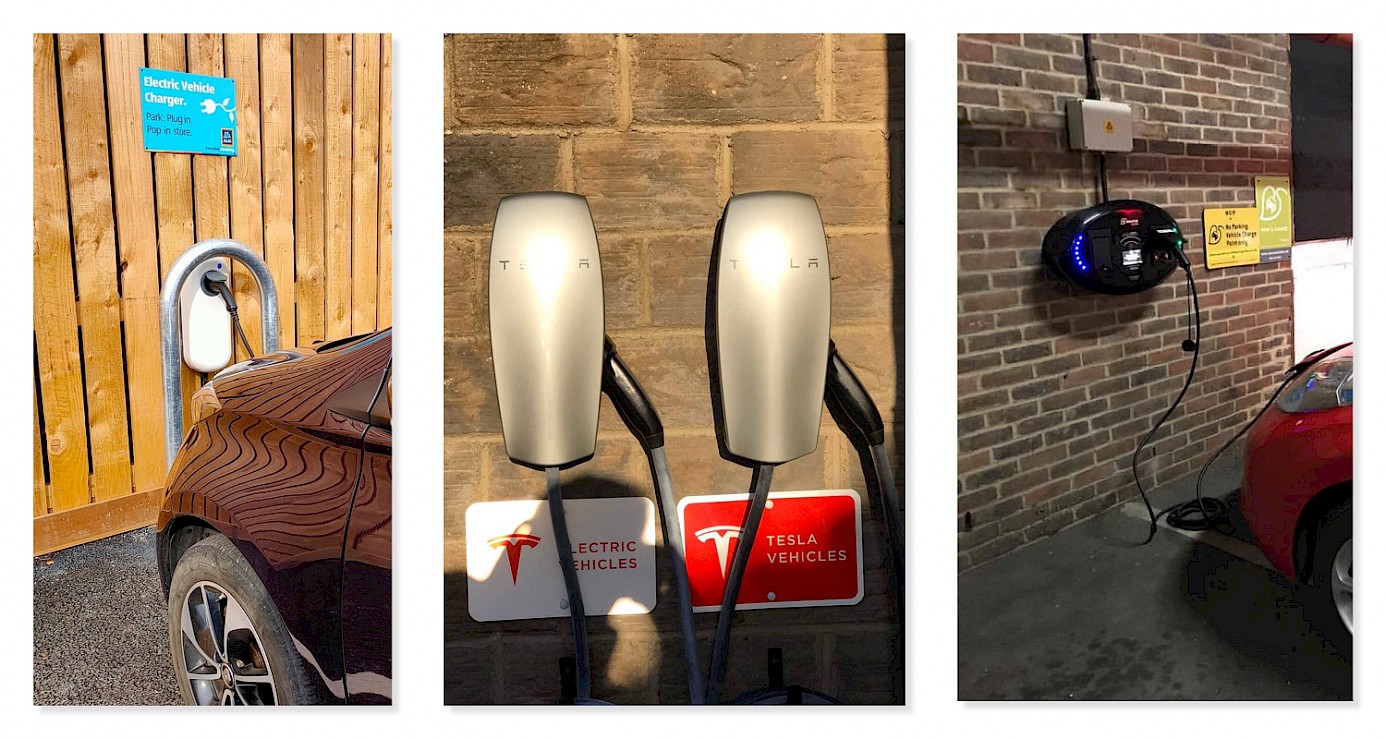
As the name suggests, wall-mounted EV chargers are chargers mounted to a vertical surface like a wall, fence or in some cases, a dedicated plinth. Because of the need to be mounted on a vertical surface, wall-mounted EV chargers are typically found in enclosed locations such as multi-story car parks.
These types of EV charging points are typically untethered with one or two charging cable ports depending on the manufacturer.
Bollard EV charge points
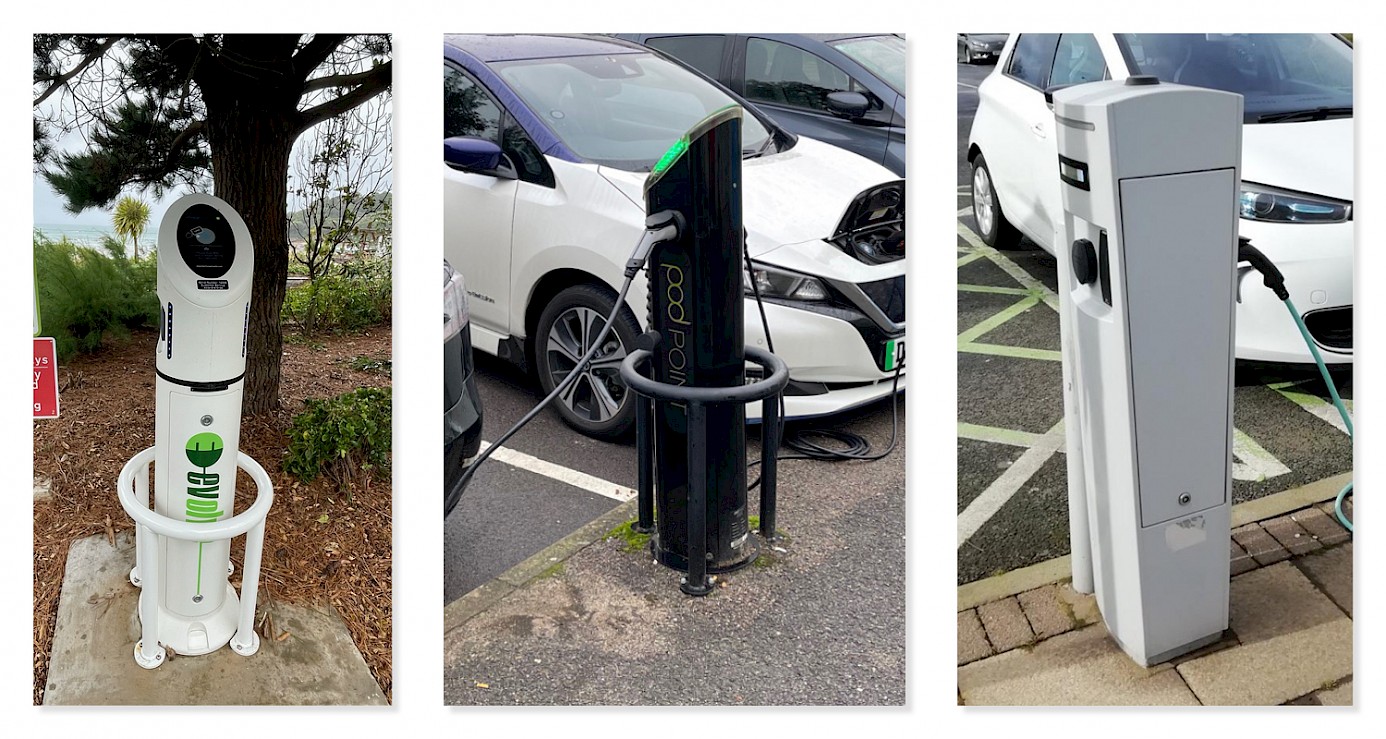
Bollard EV charge points are free-standing charge points that resemble roadblock posts used to stop cars from accessing certain areas hence their name. Typically found in outdoor car parks and curbsides, Bollard Charge points are untethered usually with two charging cable ports on each side.
Free-standing charge points
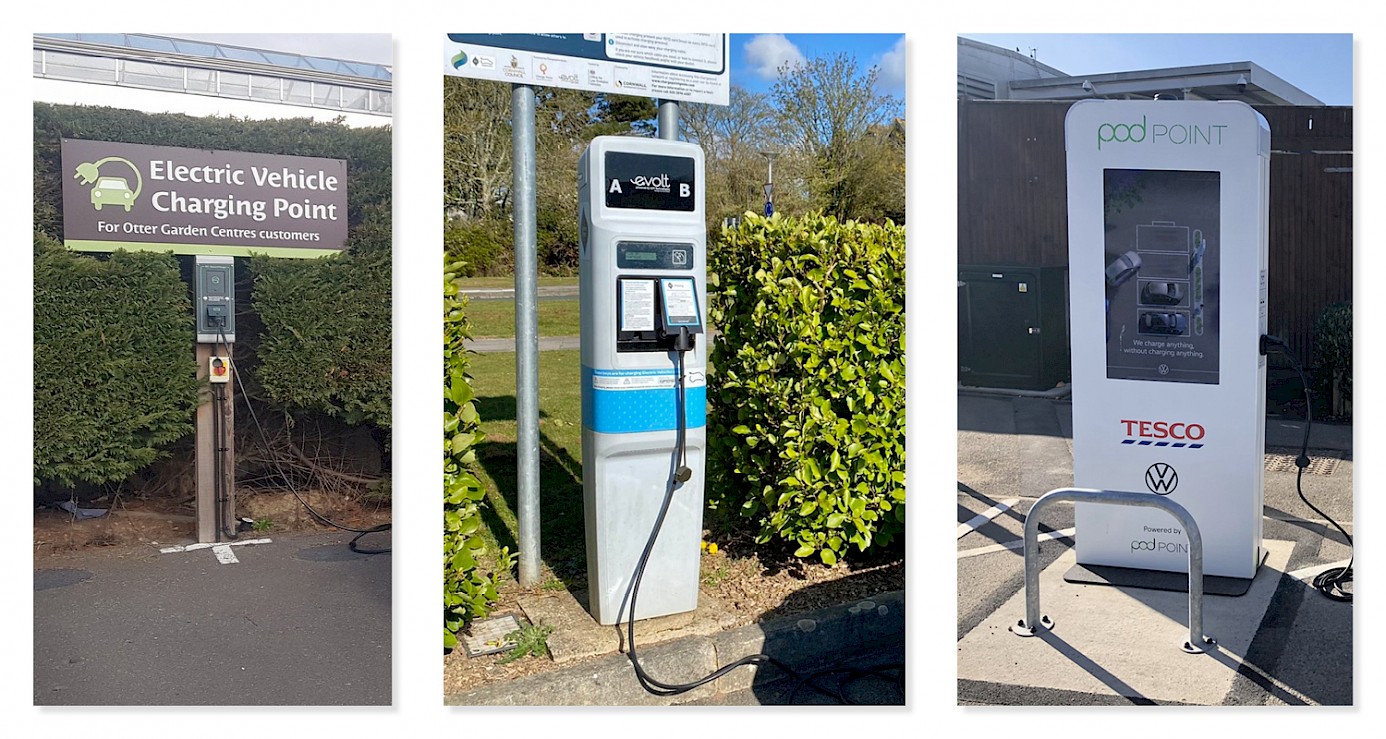
Free-standing charge points are similar to bollard charge points but are usually taller and can come tethered or untethered. These types of EV charge points are typically found in supermarket car parks with adverts advertising the business they are situated in on their screen if they have one.
Lamp post/on-street charge points
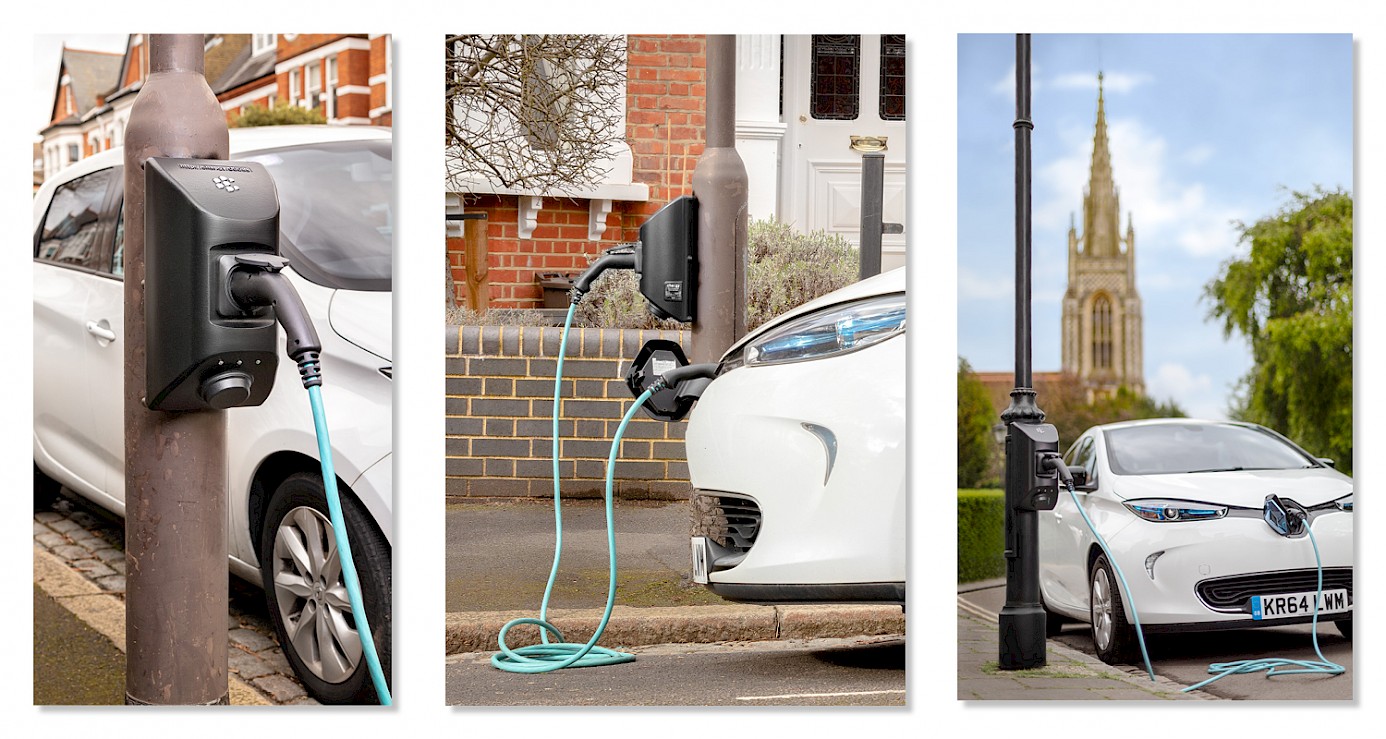
Images provided by: char.gy
Lamppost charge points are small untethered charge points mounted on or sometimes built into curbside lampposts. Because of this, these charge points can be hard to spot to the untrained eye and will typically have a sign above them for easy identification. Unlike other charge points on this list, Lamppost charge points tend to be slow chargers (typically charging at around 2-6kW) due to the unit sharing power with the lamp post it’s attached to.
Nearby to lampposts, you might also encounter charge points mounted on a dedicated post. These are on-street EV charge points and in most cases, they share a power feed from the grid with nearby lampposts via an underground connection. Because of this, like lampost charge points, on-street EV chargers tend to charge electric vehicles at a slower rate than a charge point with its own dedicated power supply.
In most cases, anyone can charge their vehicle using a lamppost or on-street charge point however their primary function is to serve as a charging solution for residents who do not have access to a home EV charger.
Last updated: Aug 10, 2023