Easee One vs NexBlue Point 2

Last updated: Sep 15, 2026
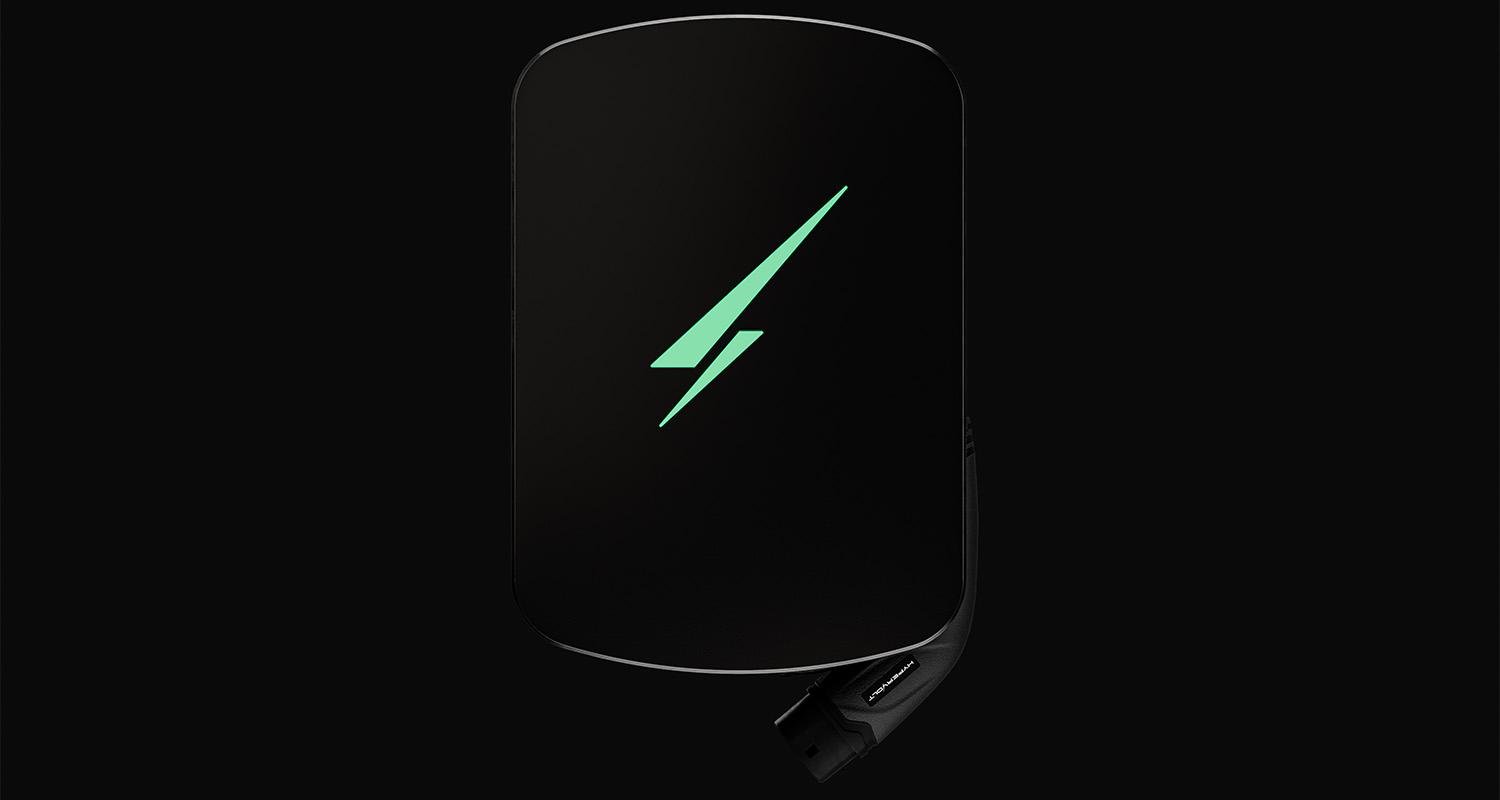
The Easee One and NexBlue Point 2 have plenty in common.
Both are compact 7.4kW home EV chargers that can switch between tethered and untethered charging, connect over WiFi and mobile data, and offer smarter control through a polished smartphone app.
Look closer, though, and some important differences emerge. The Easee One places greater emphasis on design, build quality and proven reliability, while the newer NexBlue Point 2 includes more smart electric vehicle charging features for a lower installed price. So, which is the best EV charger for your home EV charging needs?
| ||
Starting Price (with installation) | £918 | £846.90 |
Power output | 7.4kW | 7.4kW |
Connectivity | WiFi, Bluetooth, mobile data | WiFi, Bluetooth, mobile data |
Direct smart tariff integration | None | Intelligent Octopus Go, OVO Pay as You Go, E-on Next Drive Smart |
Outdoor IP Rating | IP54 | IP54 |
Open pen conductor protection | Yes | Yes |
Design and build quality
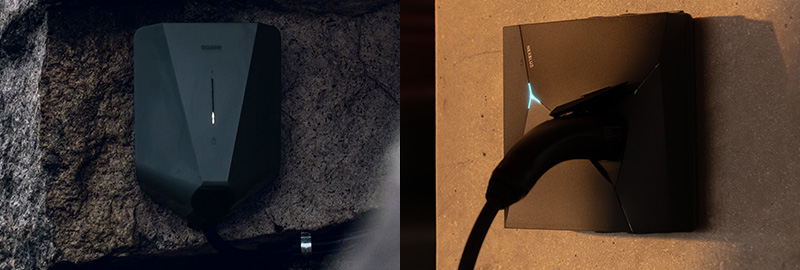
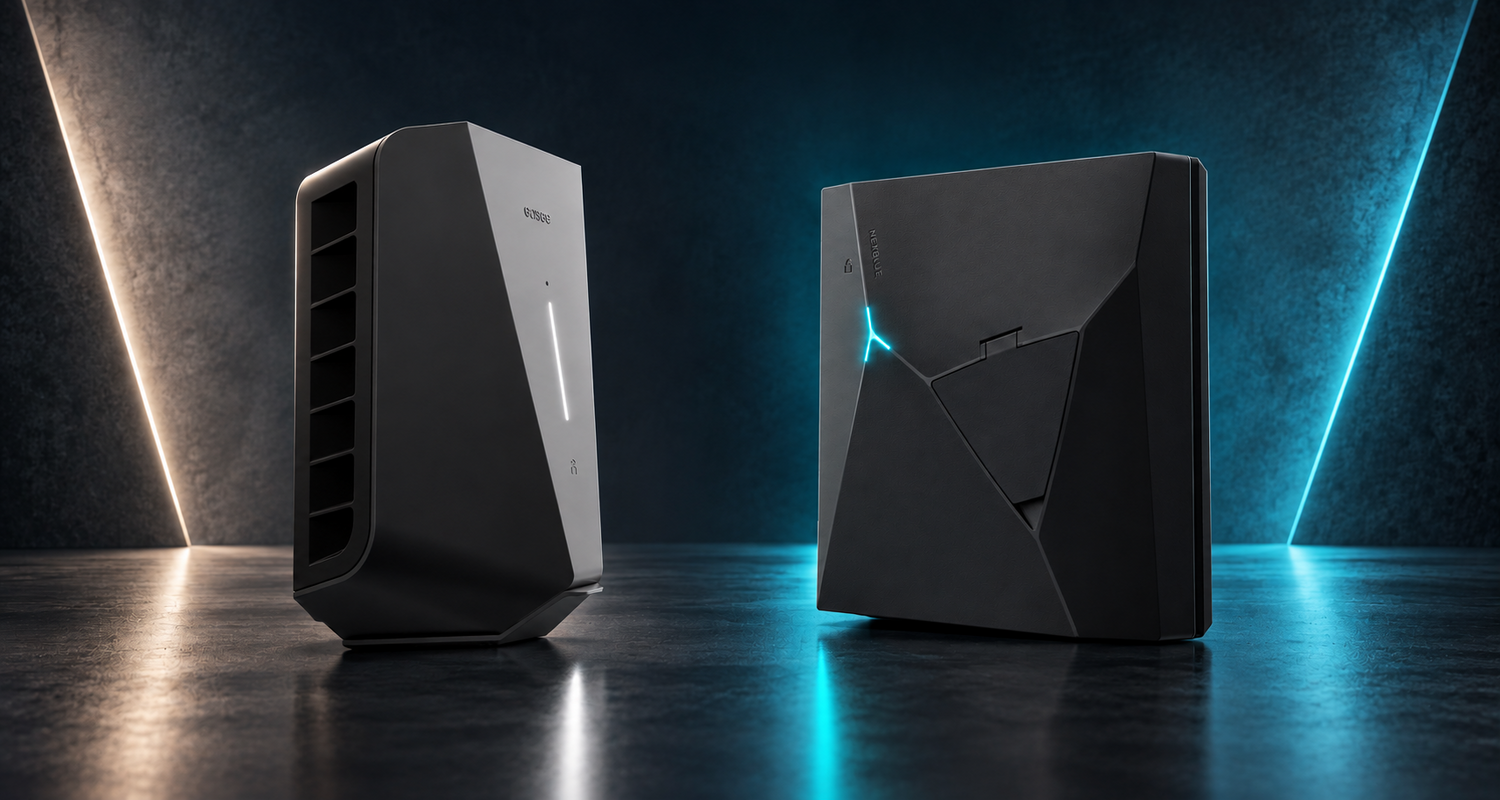
The Easee One is one of the smallest and best-looking home EV chargers available.
Its minimalist Scandinavian styling is smart without being too attention-seeking, while a choice of replaceable front covers lets you match the unit to your home or change its appearance at a later date.
The available accessories include a blue cover, although it is closer to a bright blue than dark blue.
At 256mm tall, 193mm wide and 106mm deep, it also takes up very little wall space.
Its appearance is backed up by excellent build quality.
Although the casing is mostly plastic, the charger feels reassuringly solid and stays firmly in place when a cable is connected or removed.
The downward-facing socket also helps the charging cable sit closer to the wall when the unit is being used in tethered mode.
The NexBlue Point 2 is slightly larger, but it is still a compact unit that should blend neatly into most properties.
Its geometric black casing has a clean, contemporary look and its matte finish feels durable.
We particularly like the soft-close charging-port cover, which is a small but surprisingly premium touch.
There are compromises, however. Black is the only colour available and the front cover cannot be swapped.
When a cable is locked into the charger, it also exits the socket at a 90-degree angle.
This makes the cable more prominent and potentially easier to knock if the charger is installed beside a narrow driveway or walkway.
Verdict: Easee One
The NexBlue Point 2 is attractive and well made, but the Easee One wins this round.
Its smaller footprint, swappable faceplates, sturdier feel and neater cable position make it the more polished product.
Connectivity and reliability

Both chargers use WiFi as their main internet connection and have built-in 4G connectivity as a backup.
This is particularly useful if the WiFi signal is weak where the charger is installed or your home broadband temporarily goes offline.
Maintaining a connection allows you to keep using app controls, schedules and other smart features.
The Easee One has been available in the UK for considerably longer and has developed a strong reliability record.
During our review it completed immediate and scheduled charging without trouble.
We did encounter an incorrect charging-rate reading during setup, but resetting the charger and reopening the app fixed it.
Our experience of Easee's support has also been positive, with queries generally handled quickly and more complicated problems investigated properly.
The NexBlue Point 2 connected to its app quickly and worked well throughout our initial testing.
Its combination of Wi-Fi and an integrated 4G eSIM should provide good resilience.
However, it is a much newer charger, so it has not yet had the same opportunity to prove its long-term reliability or customer-support experience.
Verdict: Easee One
On paper, this is a draw because both chargers offer Wi-Fi and mobile data.
In practice, the Easee One takes the win for now because it has the longer track record.
The Point 2 made a strong first impression, but only time will tell whether it proves equally dependable over several years.
Apps and smart charging features

Both apps cover the everyday essentials, including starting or stopping a charge, locking the charging cable, creating schedules and monitoring energy use.
They are also among the better-looking charger apps we have used, with good ease of use at a high level.
The Point 2 goes further, however, with more advanced tariff tools and support for sharing one EV charger between several users.
Easee one App
The Easee app is clean, modern and refreshingly easy to use.
Its home screen shows the charger's status and provides quick access to common controls, including schedules, the cable lock and LED brightness.
You can also view individual charging sessions, total energy consumption and estimated charging costs, which is useful for household budgeting or claiming business mileage expenses.
The Easee app now allows you to select your electricity tariff from a list, making setup more convenient and giving the app a better understanding of your peak and off-peak rates.
You can then schedule the charger to operate during the tariff's cheaper periods and use its energy-consumption data to keep track of charging costs.
However, selecting a tariff in the Easee app should not be confused with direct smart-tariff integration.
The Easee One cannot currently hand control of charging to services such as Intelligent Octopus Go or OVO Charge Anytime through the charger itself.
Compatibility may still be available through your electric car, depending on its make and model.
NexBlue Point 2 app
The myNexBlue app is similarly polished and straightforward.
Connecting the app to the charger was quick in our testing, while scheduling and cost-tracking tools were easy to find rather than hidden within complicated menus.
You can also share access with multiple users, making it a good fit for households with more than one EV driver.
Its standout software feature is EcoPilot.
Once you select your energy tariff, enter how long the car needs to charge and choose a ready-by time, EcoPilot plans the session around the cheapest available periods.
You can connect a supported energy account, pick a tariff from NexBlue's database or enter its rates manually.
EcoPilot does not read the car's battery level, so you must estimate the number of charging hours required.
It may also use peak-rate electricity if this is necessary to deliver the requested charge by your chosen deadline.
A conventional schedule remains available if you want tighter control.
Verdict: NexBlue Point 2
The Easee app is excellent for simple, dependable day-to-day control, but the Point 2 wins on features.
EcoPilot, better tariff handling and multi-user sharing make myNexBlue the more capable app.
Solar charging

The NexBlue Point 2 includes solar charging functionality and a wired CT clamp as standard.
The clamp measures how much electricity your home is importing from or exporting to the grid, allowing the charger to direct genuine surplus solar power into your car rather than relying on the total output of your solar panels.
This can work alongside battery storage, although the complete setup must be configured carefully so the charger does not drain the home battery when you want to save that energy for later.
Solar-only charging requires approximately 1.4kW of surplus power.
If the available surplus drops below that threshold, charging pauses until it rises again.
This is normal for a single-phase AC charger, although households with smaller solar arrays or high daytime consumption may experience more interruptions.
The Easee One can also charge using surplus solar, but only when paired with the separately installed Easee Equalizer.
This extra equipment unlocks a solar-only mode and a grid-and-solar mode, but the accessory currently adds £224 to the price.
The same device can also provide load balancing by monitoring demand around the property and protecting the main fuse.
If the home has more power available, the charger can raise its output again, up to the vehicle and installation limits.
Verdict: NexBlue Point 2
The NexBlue Point 2 wins comfortably. Both offer useful solar modes, but the Point 2 includes the necessary monitoring equipment as standard, while the Easee One requires a significant additional purchase.
EV tariff compatibility

The Easee One lets you manually schedule charging during an off-peak window, so it can still be used with almost any time-of-use tariff.
What it lacks is direct charger integration with intelligent EV tariffs.
That means it cannot hand control of charging to services such as Intelligent Octopus Go or OVO Charge Anytime through the charger itself.
Compatibility may sometimes be available through the vehicle instead, but this depends on the make and model.
The NexBlue Point 2 supports Intelligent Octopus Go, OVO Charge Anytime and EDF's EV charging bolt-on.
It can therefore allow a compatible supplier to schedule charging automatically, potentially giving the driver access to cheaper or more flexible charging periods.
EcoPilot also brings tariff-aware charging to many conventional fixed and time-of-use tariffs.
Drivers on a less common product, such as Lightning Intelligent, should confirm current compatibility before ordering.
Tariff support can change through new integrations and software updates, so check the charger and vehicle eligibility on the energy supplier's website at the date you apply.
It is worth distinguishing tariff integration from NexBlue's Smart Charge Rewards.
Rewards cannot be used alongside Intelligent Octopus Go, OVO Charge Anytime or other products that already control when the car charges.
Drivers should compare the total saving from each option rather than assuming the £5 monthly reward will always be the best deal.
Verdict: NexBlue Point 2
The Point 2 is the clear winner.
The Easee One can follow a manual off-peak schedule, but NexBlue's direct integrations and EcoPilot give drivers more ways to automate charging around cheaper electricity.
Choosing a competitive EV tariff can make home charging considerably cheaper. You can use our Cost to Charge tool to compare estimated charging costs across popular UK EV tariffs.
Unique features

Easee One unique features
The Easee One's most distinctive feature is its modular construction.
Its front cover can be removed and replaced with another colour, giving owners more freedom to personalise the charger or refresh its appearance.
The charging unit can also be separated from the backplate, which may make servicing or replacement more straightforward.
Easee's load-sharing system is another advantage for households with several electric cars.
Up to three Easee One chargers can operate on the same circuit, automatically sharing the available electrical capacity and queueing charging when necessary.
An integrated RFID reader also improves security by allowing access to be restricted with compatible tags.
NexBlue Point 2 unique features
Smart Charge Rewards is the Point 2's headline feature.
Eligible users receive a £10 joining bonus and can then earn £5 for each qualifying month by allowing NexBlue to move certain charging sessions to lower-demand periods.
At least two sessions must be completed during the month and funds can be withdrawn once the balance reaches £15.
The scheme could be worth £70 in the first year and up to £60 per year after that, provided its terms remain unchanged.
The restriction is that Smart Charge Rewards cannot operate alongside an intelligent tariff or package that already controls EV charging.
It is best viewed as an added benefit for eligible drivers on suitable fixed or time-of-use tariffs, rather than the sole reason to buy the charger.
The Point 2 also includes RFID access control, multi-user app sharing and dynamic load balancing as standard, strengthening its value for households with several drivers or limited electrical capacity.
Bluetooth is available for local communication during setup, complementing its Wi-Fi and 4G connectivity.
Verdict: Easee One
The Easee One's modular design and ability to share power between up to three chargers make it particularly appealing to multi-EV households.
However, the NexBlue Point 2 wins this round. Smart Charge Rewards is genuinely distinctive, while its multi-user sharing and dynamic load balancing give it the broader collection of features straight out of the box.
Installation and warranty

Both units have the electrical safety features needed for a straightforward UK home EV charging installation, including open PEN conductor protection, so a separate earth rod is not normally required.
Each supports dynamic management of the property's available electrical capacity, although the necessary monitoring hardware is included with the Point 2 and requires the Easee Equalizer on the Easee One.
The Easee One has an especially compact backplate and supports load sharing between up to three chargers on one circuit, making it an appealing option for households planning to add another EV.
Its modular design can also simplify replacing the charging unit without changing the whole installation.
Warranty cover favours NexBlue. The Point 2 comes with a five-year manufacturer's warranty, compared with three years for the Easee One.
Exact EV charger installation requirements will vary according to the property, particularly if the consumer unit and charger are far apart or a wired CT clamp cannot easily be routed between them.
A qualified installer should assess the electrical supply, cable route and main fuse before work begins.
Whichever charge point you choose, use an experienced installer or trusted trader and check what post-installation support is included.
Smart Home Charge provides expert home EV charger installation across England, Scotland and Wales.
Our team can assess your property, arrange the installation and support you before, during and after the charger is fitted.
Our professional installers will also explain what to expect from the installation, how to connect the app, use the cable lock and access help if the unit develops a fault later in its life.
Verdict: Easee One
The Easee One has the edge for multi-charger installations and benefits from a proven installer-friendly design.
For most single-charger homes, however, the Point 2 wins because its load-balancing equipment is included and its five-year warranty provides two additional years of cover.
Price and value for money
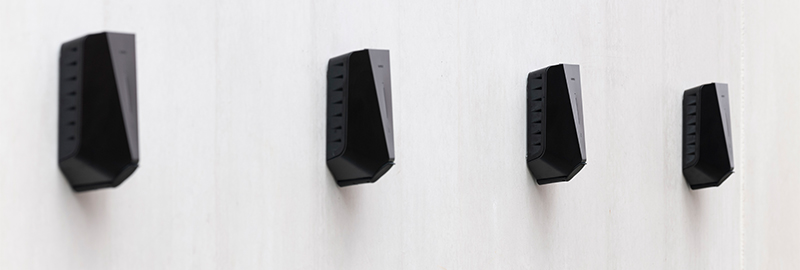
At the time of writing, the Easee One costs from £918 with standard installation or £489 for the charger alone.
The NexBlue Point 2 starts at £846.90 installed or £492 charger-only.
The hardware-only prices are almost identical, yet the NexBlue costs £71.10 less as an installed package and includes dynamic load balancing and solar monitoring.
Adding the £224 Easee Equalizer to bring comparable solar functionality to the Easee One increases the difference substantially.
You may be able to spread the cost with credit, but compare the total amount repayable rather than focusing only on the monthly price.
The Easee One still justifies some of its premium through better build quality, customisable covers, neater cable routing and a longer record of reliable service.
Nevertheless, buyers interested in solar charging or smart tariff integration receive considerably more functionality from the Point 2 before spending anything on extras.
Eligible users may also recover part of its cost through Smart Charge Rewards, although future rewards and eligibility should never be treated as guaranteed.
Verdict: NexBlue Point 2
The NexBlue Point 2 offers better value for most buyers.
It combines a lower installed price with more standard equipment, broader software functionality and a longer warranty.
The Easee One's extra cost is easiest to justify if design quality, customisation or a proven track record matters more than smart tariffs and solar integration.
Which charge point should you buy?
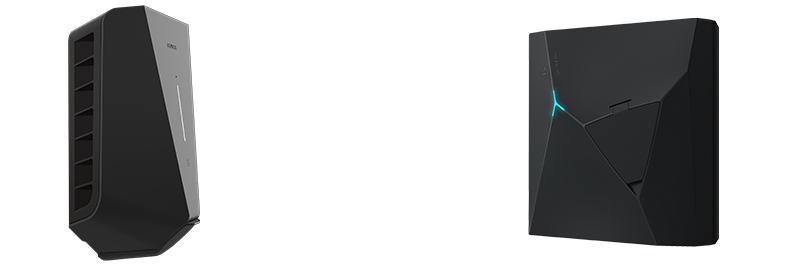
As our Easee One review found, the Easee One remains a superb all-round home charger for electric vehicles.
Choose it if you want the smaller and more stylish unit, value replaceable colour covers, need a tidy tethered cable arrangement or are planning an installation with several chargers sharing one circuit.
Its app is simple to use, its build quality is excellent and its established reliability provides additional reassurance.
For most buyers in the UK market, however, the NexBlue Point 2 is the stronger package.
It matches the Easee One's tethered-or-untethered flexibility and dual connectivity while adding solar charging equipment, dynamic load balancing, intelligent-tariff support, EcoPilot, Smart Charge Rewards and a five-year warranty.
Crucially, it does so for a lower installed price, helping owners save on both the initial purchase and potentially their ongoing charging costs.
The Point 2 is therefore our overall winner.
It does not feel quite as premium as the Easee One and its outward-facing cable is less elegant, but its greater functionality and stronger value are difficult to overlook.
If you want a compact charger that can adapt to solar panels, changing tariffs and different charging habits, the NexBlue Point 2 is the better buy.
Not convinced that either model is right for you? Take a look at our guide to the best home EV chargers in the UK to compare them with other leading options.